In time, editions of these books were collected and religious communities gradually narrowed down the list of books they deemed authoritative. However, different communities used different criteria. This process of including certain books as Scripture and rejecting others is called canonization.
365 DAYS THROUGH THE OLD AND NEW TESTAMENT
he purpose of the Lord has always been that believers should remain revived, and keep on living the revived life, hence the fulfillment of the promise of the Holy Spirit to come and dwell in the heart of every believer, so that the victorious Christian life might be achieved qualitatively through the entrance of the word of the Lord.
Over the years they had been an attempt by many to trust the power of the Holy Spirit to bring about the move of God in every sphere of human strata, and this is usually powered by zealous believers and followers of the Lord Jesus Christ who desires to and longs for the spread of the knowledge of the glory of the Lord, in order to bring about the fulfillment of the Old Testament prophecy in Hebrew 2:14 – “For the earth will be filled with the knowledge of the LORD, as the waters cover the sea.” It is also reason why the Father had to send His Word down to earth in human form – Jesus Christ. Jesus is the visible manifestation of the invisible God. God also desires that all be reconciled unto him, so that they may be restored to their true spiritual status, hence the miracle of the new birth – the new creation man, taking shape in the heart of everyone who comes to Christ for such transformation.
The new life which all believes receive in Christ what has been transcribed into the written form as the Word of God, the content of the Holy Bible carried by its readers in all possible formats, be it electronic (Bible App.) or printed (Hardcopy Bible).
There has never been a revival which stood the test of time without the frequent reading/study of the word of God with deep meditation, done personally or in group of united believers (the church).
Every new believer in Christ is born of God as a result of the Word of God. “For you have been born again. Your new life did not come from your earthly parents because the life they gave you will end in death. But this new life will last forever because it comes from the eternal, living word of God.” 1 Peter 1:23. This is because, every one born of God is not supposed to perish; all flesh is as grass, and the glory of every natural man is as the flower of the grass. The grass withers, and its flowers fall away. But the word of the Lord will last forever (1 Peter 1:24-25). It is designed to exist eternally. This means if you are born of an eternal sperm (seed of life) you carry the potential of living eternally, a life without end, and this is only possible when any man embraces the Good News that is been preached about by the obedient believers who accept the ministry of a herald of the Good News.
Download printable 180 – Day bible reading plan free.
Download THE ULTIMATE MULTI-CHOICE bible reading plan free (printable).
This therefore implies that the only way for true revival fire to be sustained through the times is when much prayer and daily communion with the Holy Spirit is done with much concentration on the word of God. A good knowledge of the true word of God in quantity and quality is as firewood is to fire. Prayers keep the fire of the Spirit ever sharp and always burning, firewood sustains the ignited and burning fire; the Holy Spirit is the oil that every virgin (believer) must carry and to never of lack.
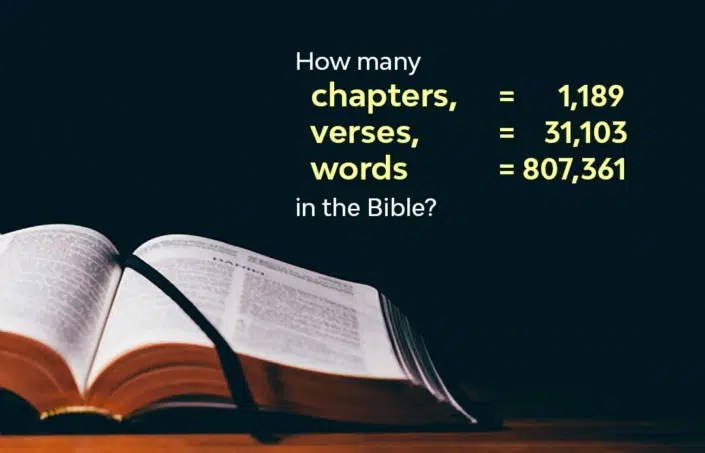
There are 1189 chapters in both the Old Testament and New Testament combined together.
This is a bible reading and study plan that aims at raising the consciousness of believer who profess faith in the Lord Jesus Christ, and who want to live a victorious Christian life in the call they’ve been given by Christ unto salvation.
These plans are relatively suitable for every category of Christian, from the newest convert to the oldest man in faith. It is recommendable for all kinds of Christian, who want to make their faith in Christ worth it.
The Christian faith does not end at verbal proclamations, but the doing of the word of God that is inherently established in the heart of a believer.
Jesus began to do and teach (Acts 1:1-2). It is expected that you know the content of the holy scriptures from Genesis to Revelation, such that even though you may not be gifted at cramming it all in your brain, you at least can say a verse correctly and have a content that the Holy Spirit can remind you of when the adversary comes to tempt you anywhere, anytime. In moments when it becomes uneasy to hold the -Bible in your hand, or use a bible software, it is the word you have known that will keep you, so that, even in an environment where there exist great hostility against Christ and every article of the Christian faith, you invisible intranet (known word) is what will keep you.
The three young Hebrew boys that were brought to Babylon survived all the hard trials because, Lord they had given time to the laws before they were captured to the foreign land; there, they found it difficult to either attend the temple rituals or hear the laws being read, yet they endured their trials and temptations-the laws stored up within helped them.
As you sacrifice a long time to do study of the word of God, you’d also be giving the Lord the quality times he needs to show you a lot of secrets he’s also wanted to show you. God speaks to his children more through the scriptures; therefore, those who are more committed to the course hear the Lord more accurately than those who just depend on dreams and visions to take their decisions. If you’ve been afraid of going through the entire word of God at least once, determine to confront your fears today. You can never change what you will not confront, because even your fear fears you more than you fear it.
In fact, do not forget that every other Christ-based novel is sourced from the holy bible. Therefore, if you are enjoying a wonderful derivative of the scripture, then you should determine to rehearse the entire scriptures so that you can be a good discerner of all that people write and preach about your Saviour-Jesus Christ.
Below is a summarized outline on various bible reading plan you can simply adopt anytime, anywhere and suitable for all, including Children, Teenagers, Adult, those in courtship, a couple, bible clubs, Clergy, (Ministers of the gospel of Jesus Christ), Students/Pupils, Applicants/Workers, Politicians etc.
Remember: “Ezra had devoted his life to…”
- 1. Studying the Law of the LORD, to
- 2. Practicing it and to
- 3. Teaching all its Laws and regulations to the people of Israel. (Ezra 7:10)
Over 40 writers including scribes, fishermen, kings, royal officials, musicians, prophets, poets, farmers and others are believed to have contributed to the texts of the Bible.
Originally, the Bible was written in Hebrew and some parts in Aramaic. Today, it has been translated to over 2,500 spoken and written languages around the world. By far, it is the best-selling book of all time with an estimated 6 billion copies from 1816 until 1992.
The Bible is grouped into five classifications
The Holy Bible is a collection of many type of books – historical books, books of poetry, prophetic books, epistles (writing directed or sent to a person or group of people), and the Gospels.
The Bible has 17 historical books
Here are the 17 historical books of the Bible: Genesis, Exodus, Leviticus, Numbers, Deuteronomy, Joshua, Judges, Ruth, 1 Samuel, 2 Samuel, 1 Kings, 2 Kings, 1 Chronicles, 2 Chronicles, Ezra, Nehemiah, and Esther. These books establish the historical events of the Old Testament.
Zechariah, and Malachi. These books were all written by the minor prophets of the Bible.
The Bible has 4 Gospels Accounts
Here are the 4 Gospels of the Bible: Matthew, Mark, Luke, and John. Moreover, the term “Gos” comes from the Old English word for God, meaning “good” and “Spel” which means “News.” In Christianity, the word “Good News” refers to Jesus’ birth, death, sacrifice, and resurrection as part of saving His beloved people.
The Bible has 21 Epistles
Here are the 21 Epistles of the Bible: Romans, 1 Corinthians, 2 Corinthians, Galatians, Ephesians, Philippians, Colossians, 1 Thessalonians, 2 Thessalonians, 1 Timothy, 2 Timothy, Titus, Philemon, Hebrews, James, 1 Peter, 2 Peter, 1 John, 2 John, 3 John, and Jude. These books are all attributed to the apostle Paul, although some dispute whether he wrote all 13.
How many people wrote the bible?
Authors of the Bible
Over 40 authors contributed to the Bible. The authors’ statuses in life range from being kings, peasants, prophets, philosophers, fishermen, poets, statesmen, and scholars.
The first Bibles did not have verses
The first Bibles can be hard to memorize because it is not organized into verses. The Geneva Bible was the first Bible to have numbered verses.
Who divided the Bible into Chapters and Verses?
When the books of the Bible were originally written, they did not contain chapter or verse references. The Bible was divided into chapters and verses to help us find Scriptures more quickly and easily. It is much easier to find “John chapter 3, verse 16” than it is to find “for God so loved the world…” In a few places, chapter breaks are poorly placed and as a result divide content that should flow together. Overall, though, the chapter and verse divisions are very helpful.
The chapter divisions commonly used today were developed by Stephen Langton, an Archbishop of Canterbury. Langton put the modern chapter divisions into place in around A.D. 1227. The Wycliffe English Bible of 1382 was the first Bible to use this chapter pattern. Since the Wycliffe Bible, nearly all Bible translations have followed Langton’s chapter divisions.
The Hebrew Old Testament was divided into verses by a Jewish rabbi by the name of Nathan in A.D. 1448. Robert Estienne, who was also known as Stephanus, was the first to divide the New Testament into standard numbered verses, in 1555. Stephanus essentially used Nathan’s verse divisions for the Old Testament. Since that time, beginning with the Geneva Bible, the chapter and verse divisions employed by Stephanus have been accepted into nearly all the Bible versions.
Why was the Bible Written?
Why did God give us the Bible?
Certainly for a multitude of excellent reasons. For example: to give us a historical record of God’s dealings with man … to reveal to us much about God Himself and the will of God … to teach about living a holy, God-centered life … to tell the inspiring stories of great heroes of faith … and much, much more.
John 20:31, NASB …these have been written so that you may believe that Jesus is the Christ, the Son of God; and that believing you may have life in His name.
In the very last verse of His Gospel, the apostle John declares His twofold purpose in writing the book: (1) so that people might believe in Jesus Christ, the Son of God; and (2) that by that faith they might receive eternal life in His name.
John’s two stated motivations in writing are really one — that we might receive eternal life through faith in Jesus Christ. In other words, John wrote His Gospel to reveal Jesus Christ as the Savior and author of eternal life for all who will believe.
Let’s look at another Scripture portion that affirms this central truth.
John 5:39 [Jesus said] You study the Scriptures diligently because you think that in them you have eternal life. These are the very Scriptures that testify about me.
Some Jewish leaders (vs. 16) were opposing Jesus. He replied to them that they were indeed studying the Scriptures seeking the key(s) to eternal life. That is certainly a good thing to do. However, they entirely missed the whole point of seeking the Scriptures’ truths about eternal life. The Jewish leaders failed to grasp our central point, and Jesus made it very clear to them: “These [Jesus said] are the very Scriptures that testify about me.”
The Jews of Christ’s time were well instructed in the Scriptures of the Old Testament (the New Testament, of course, had not yet been written during Jesus’ time on earth). The religious leaders especially were well versed in the Scriptures. They were properly looking into them seeking the pathway to eternal life. But they missed it entirely!
Jesus told them (paraphrased): “Oh, you’re searching the Scriptures, yes. But you’re missing why God gave you the Scriptures. They were written to testify about me.” If the antagonistic Jewish leaders had only set aside all their biases and allowed the Holy Spirit to illuminate the Scriptures to them, they could have fulfilled the apostle John’s motivation in writing down God’s Word — (1) they could have believed that Jesus is the promised Christ, the Son of God; and (2) they could have found in Him the eternal life they were seeking in the Scriptures.
And that is just as true today. I encourage you, each time you open your Bibles, in both the Old Testament and the New, to look for Jesus. Throughout the 66 books of the word of God there is an ongoing revelation of Jesus Christ, the Son of God, The Savior of all who will believe. As Jesus said, the Scriptures testify about Him. And as the apostle John declared, the Scriptures will lead people to faith in Jesus and to eternal life in His name.
In sum, why did God give us His written revelation, the Bible? It was to reveal to us Jesus Christ, the Son of God, who came to earth, lived and ministered, died on a cross to take away our sins, then rose again from the grave and ascended back to heaven. Believe in Him, receive Him, repent of your sins, and inherit the eternal life that He sacrificially bought for you in His death on the cross, His burial, and His resurrection.
How Was the Bible Written and Transmitted?
By Brennan Breed
The word Bible comes from the Greek word biblia, which means “books.” This is a more accurate description of what the Bible is—a collection of many books, like a library. Each biblical book has a unique history and took a distinctive route on its way to inclusion in the Bible.
In the ancient Near East, at the time when the biblical books were written and copied, scribes did the work of composing and preserving important documents. Scribes were special because they could read and write; literacy was not widespread. Scribes were also editors.
The earliest biblical texts were written on scrolls made from papyrus (a plant-based paper) or parchment (animal skins that had been scraped, burnished, and stitched together). It is very likely that all biblical books were initially written on scrolls. Only in the second or third century C.E. did scribes begin to write on papyrus or parchment that was folded and stitched into a codex, which more closely resembles our modern print book. After the invention of the codex, Christians tended to copy their scriptures into codex form, whereas Jews traditionally continued to copy their scriptures in scroll form. The biblical books had to be copied over again and again so that they could be preserved for other people to read them. The process of rewriting the books of the Bible was not always perfect—sometimes mistakes were introduced or words were added or dropped. We call this whole process, including the accurate copies and the mistakes, the transmission of the text. That is, the text is transmitted (and sometimes changed) by scribes who copied the ancient scrolls over and over again.
Of course, the books of the Torah (the first five books of the Hebrew Bible) were seen as especially holy from at least the second century B.C.E. But even in the first century C.E., soon-to-be-biblical books such as Esther, the Song of Songs, Ecclesiastes, or Ezra were not easily distinguishable from books such as Jubilees, 4 Ezra, or 1 Enoch, which were just as sacred to many people at the time but somehow did not make it onto many canonical lists.
A list of books that are considered Scripture for any particular group of people is called a canon. This word comes from a Greek word meaning “measuring stick” and refers to a group opinion about whether or not a book “measures up” to being called Scripture and having sacred status. Jewish and Christian communities have different canons because Christians include the books of the New Testament in their Scripture. Within Christian tradition, Catholic, Eastern Orthodox, and Protestant communities have slightly different canons. Even among Eastern Christian traditions, there are very different canons, too. Read offline
Do this, not because you want to be a preacher, but primarily so you may obey everything written therein by practicing it, and then teaching it secondarily. (Joshua 1:8-9)
There are 1189 chapter in Both the Old and the New Testament of the bible; 950 chapters from the Old Testament and 239 chapters for the New Testament, and this is for the Christian bible. There are 27 and 39 books in the Old and New Testament respectively.
Before today, in the first generations of the composition, collection and compilation of the contents of the bible, it was encountered by so many as a library of multiple volumes and multiple scrolls. The bible is a collection of books that Jewish and Christian communities around the world have historically accepted as being uniquely authoritative.
Other researchers also laid out divisions in the Bible as follows. The Bible is the word of God. It was originally written on 49 scrolls. The Old Testament was written on 22 scrolls.
For easy and faster access of the Bible, it is worthy of note that the bible is given several divisions based on certain factors, some of which the groupings are named after. Download file

 Scripture Advocacy International